Products
Infrared pyrometers for boilers and furnaces
Customers call it an infrared pyrometer; strictly it is an infrared boiler / furnace thermometer, because what it reads is the temperature of the hot combustion gas, not a surface. One sensor design, fitted to your fuel and geometry, as a fixed instrument or a portable survey tool.
Documents
- Infra-View® literature sheetPDF · 130 KBThe two-page overview: how the sensor reads hot CO₂, the 250°F to 3,000°F range, the cooled and purged jacket, and suggested installation locations on a boiler.
- Measuring FEGT in industrial furnaces (application note)PDF · 6.2 MBWhy furnace exit gas temperature matters, contact versus non-contact methods, the factors that skew a reading, and how Infra-View® is applied.
Product list
Fixed, continuous flue-gas temperature monitoring
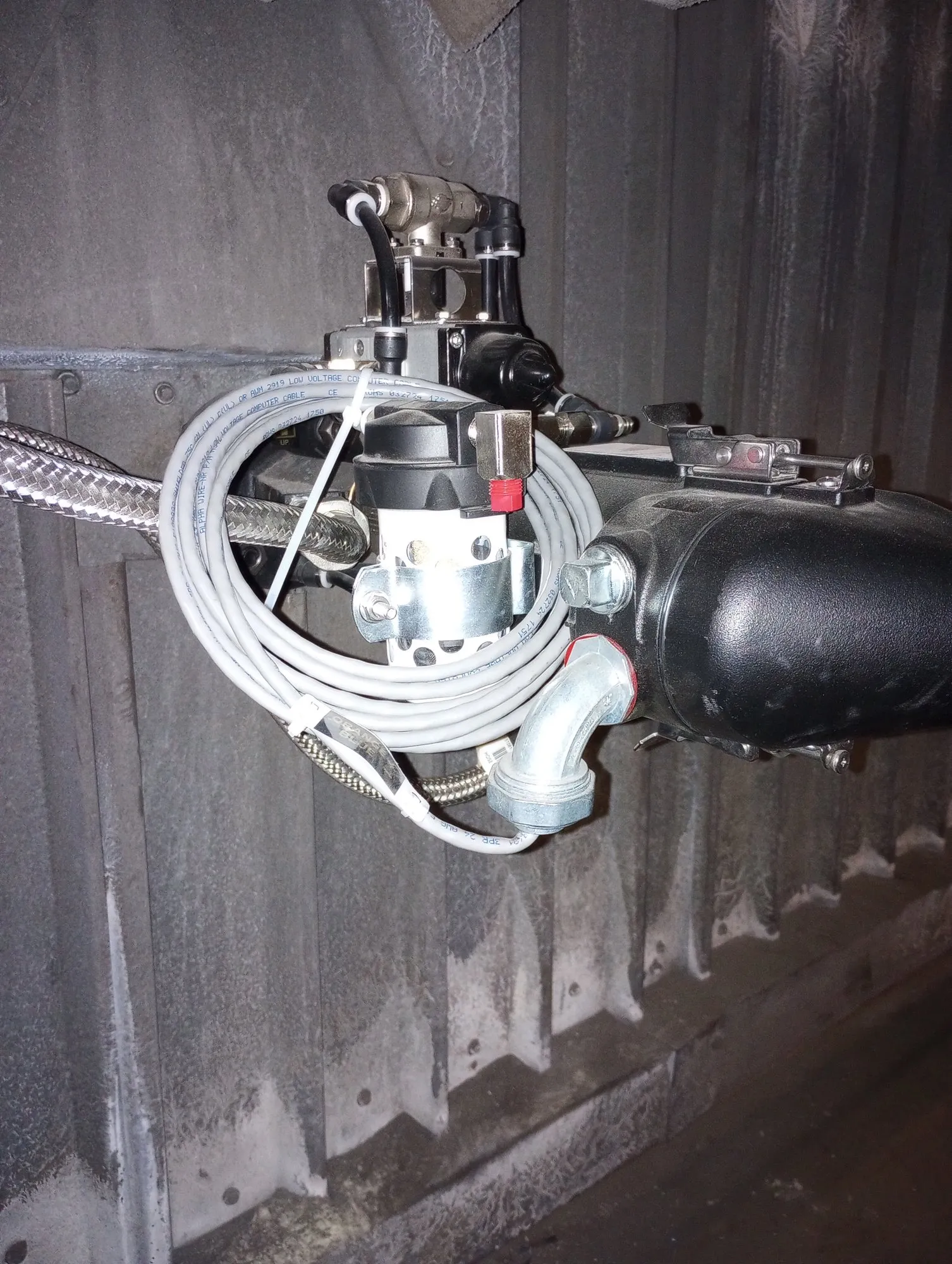
Infra-View® Infrared Boiler / Furnace Thermometer
A non-contact infrared sensor, flange-mounted on any boiler or furnace penetration, that reads the temperature of the combustion gas itself — for startup and shutdown, slagging and fouling, heat transfer and emissions-control checks — and feeds it to the DCS as a 4–20 mA signal.
- Medium
- Combustion gases
- Range
- 250°F to 3,000°F
- Note
- Passive reading, low maintenance
Handheld, for surveys and system evaluation
Infra-View® Portable Infrared Boiler / Furnace Thermometer
The same Infra-View® sensor with a battery pack, local digital readout, carrying case, tripod and mounting bracket — for taking readings at several locations before, during and after a combustion-optimization project, or checking an FGD or SNCR inlet.
- Medium
- Combustion gases
- Range
- 250°F to 3,000°F
- Note
- Great for system evaluation
Legacy product — supported for existing installations
Infra-View® GB/IS Generator Bus Duct Thermometer
An encapsulated infrared sensor that watches bus-duct temperature on generators that were uprated without new bus work, and alerts operators before bus damage causes unplanned downtime. Kept available for the plants that run it.
- Medium
- Ductwork material
- Range
- 0 to 1,000°F
- Note
- Easy to install
Where it goes on the boiler
Any existing port, door or penetration with a view of the gas path: the furnace exit, the nose arch, ahead of the superheater, the economizer outlet, the FGD or SNCR inlet. The literature sheet shows the suggested locations; the installation drawing comes with the quote once we know your boiler.